Reference: Inexpensive Neutron Imaging Cameras Using CCDs for Astronomy.
What's special about Neutron Imaging ?
Neutron inaging operates in a radiation background, which can eventually damage the CCD. Big camera companies make instruments mainly for biological or astronomical imaging where the background noise comes from the camera itself. Features such as extreme sensitivity and cooling are expensive, but can be justified if the camera lasts forever.On a neutron beam, these expensive features are negated by the radiation background, even at the best neutron labs. For example, the leading German neutron imaging group at FRM-2 Munich, has used cheap Chinese CMOS cameras for neutron imaging, even though they can afford expensive Andor cameras. We propose an intermediate solution based on large, low noise Sony CCD cameras, which can rival the most expensive, but which can be easily repaired or replaced, and also have low noise and high efficiency.
Why buy a camera instead of making one ?
It is of course possible to make your own neutron camera, but even big laboratories find it convenient to buy such equipment. Although the principles of neutron imaging are simple, there are many details that can only be learned by experience. Frankly it's faster and cheaper to buy such basic equipment rather than re-invent it. Eventually it might be modified in-house to serve a particular need, but why not start with an off-the-shelf product that is already used by many others ?What do we recommend for high resolution imaging ?
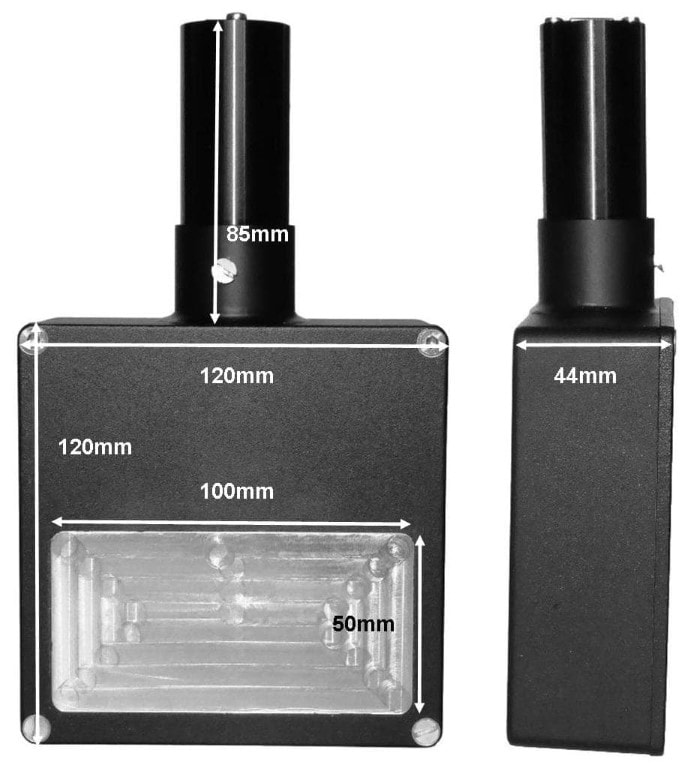
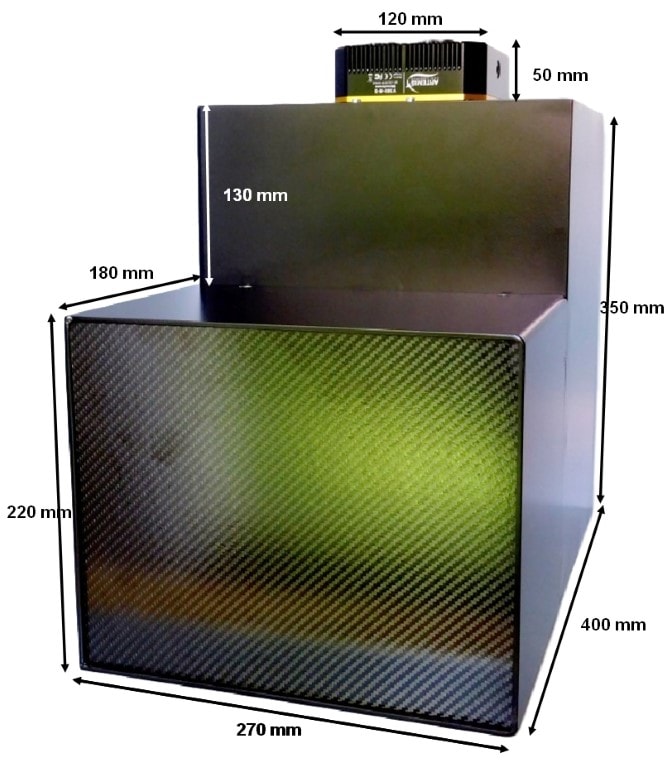 We offer high resolution neutron and x-ray cameras, which are usually custom made by a few big laboratories, and not commercially available. Or else components are marketed by big companies, with little practical experience with neutrons or even x-rays. For a small market, big company prices are high.
NeutronOptics was established in 2007, specialising in CCD cameras for both neutrons and X-rays. It is managed by Dr Alan Hewat, with many years experience in neutron scattering, including 13 years as head of the Diffraction Group at the European high flux reactor of the Institut Laue-Langevin (ILL) in Grenoble. ILL currently operates the world-leading high resolution D50 neutron tomography beamline.
How valuable is your x-ray or neutron beam time ?
 What does it cost when you spend the night collecting data... and in the morning you
find that your sample was not completely in the beam? Beam interlocks and safety concerns mean that remote monitoring of the beam is essential.
What does it cost when you spend the night collecting data... and in the morning you
find that your sample was not completely in the beam? Beam interlocks and safety concerns mean that remote monitoring of the beam is essential.
Is your incident beam fully aligned and uniform? Does all of the monochromator contribute equally? Have you even seen an intensity map of your beam, or of the monochromator reflectivity as you rotate it through the the Bragg position? (This is especially important with composite monochromators, which depend on the relative alignment of many crystals).
Simple but effective technology
Progress with CCD/CMOS cameras means that you can install a simple camera in front of your beam stop and remotely visualise your sample and beam homogeneity in real time. Or you can replace your sample by a pinhole, and visualise the reflecting surface of the monochromator, creating a video as you align it. With a suitably collimated beam, you can image large objects to high resolution with 3D neutron tomography.
Our cameras are much more sensitive than ordinary CCD cameras, where the market is driven by high resolution at the expense of sensitivity. Neutron resolution is usually limited by beam collimation, not the camera. We use the largest pixels compatible with resolution to gather more light, with individual pixels covered with micro-lenses. Large aperture lenses are used to focus the image onto the CCD, which contains no colour or other absorbing filters, and can accumulate images over seconds or even minutes if necessary, with very low noise. We use Peltier cooling and slower read-out to reduce noise (and cost). Our compact cameras are USB powered and controlled by the simplest computer.
This technology was originally developed for amateur astronomy, and NeutronOptics has built on that expertise to market world class cameras while keeping costs low. We supply neutron and x-ray cameras to well over 50 laboratories in most advanced countries, but also in developing countries with the help of an international agency.